Website localization means adapting your site, not just its words, for readers who speak another language: translated pages, layouts that survive longer text, URLs search engines can tell apart, and formats such as dates and currency that feel native. For a Florida business, the decisive work happens in the build and the search setup. A well-translated page on a site that was not built for several languages still loses visitors and rankings. That is why planning the languages, the design, the CMS and the SEO structure together, with one web team, is the safest route to a multilingual site that earns leads.
Iwdesigners
Build a Website for More Languages
IWD Marketing provides custom web development, responsive design, SEO, and AI-driven optimization for businesses planning a multilingual site.
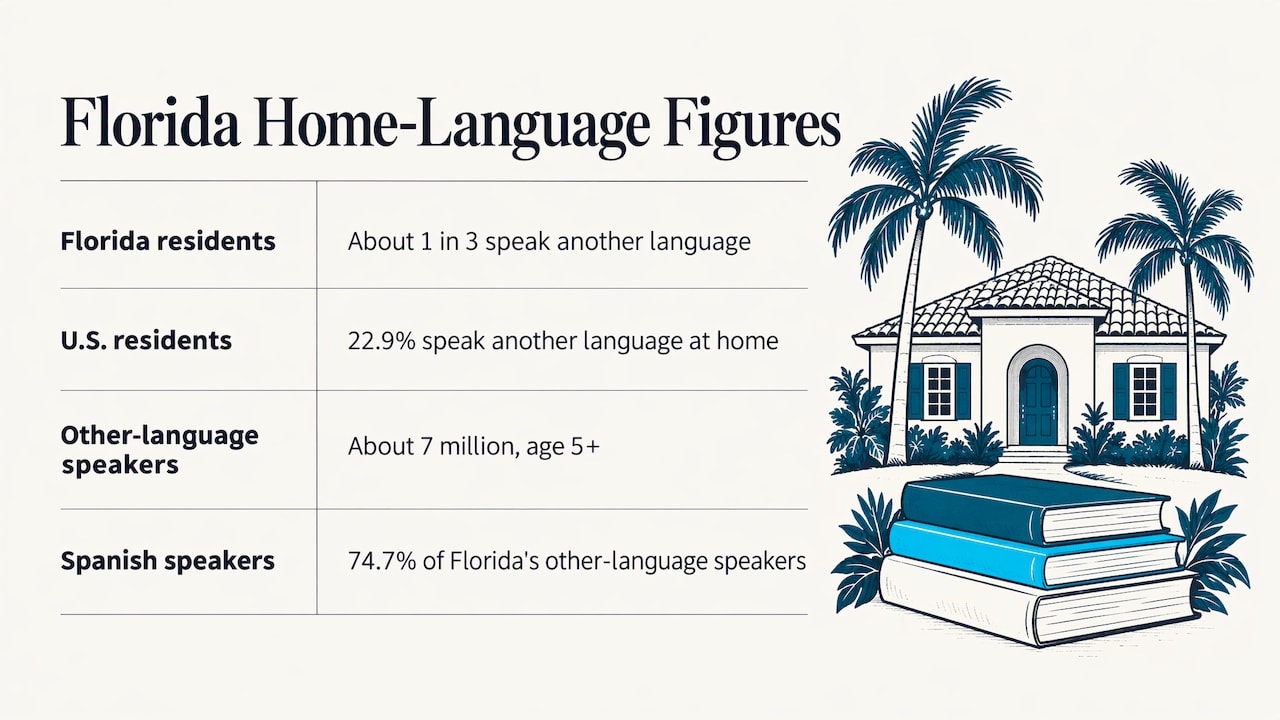
You do not need overseas customers to need a multilingual site. According to USAFacts’ analysis of Census survey data, about 7 million Florida residents age 5 and older speak a language other than English at home, roughly one in three, compared with 22.9% nationally. Spanish accounts for about 74.7% of those speakers, followed by Haitian Creole and Portuguese.
For a plumber in Palm Beach County, that means a homeowner searching for an emergency repair may type the query in Spanish. For a Florida law firm, a prospective client may want to read about the process in Haitian Creole or Portuguese before calling. For a contractor, a bilingual estimate page can be the difference between a call and a bounce. These readers are ready to hire. They just need a site that speaks to them.
What website localization services include
Buyers often ask for “translation” and get a block of text pasted into a template. A complete localization project has several layers.
Content translation and adaptation
This is the visible part: page copy, menus, buttons, forms, error messages, image text, and metadata such as page titles and descriptions. Good adaptation changes examples, units, tone, and calls to action so they fit the reader. A service page that says “licensed and insured in Florida” may need different phrasing to build trust with a Spanish-speaking homeowner, not a literal copy.
The U.S. Department of Justice’s Michael Mulé, in a 2022 Digital.gov Q&A, recommends listing your vital English content first, identifying the language communities you serve, and setting a translation schedule. He also advises working with providers who use translation memory software (a database of previously translated phrases) plus a glossary, so repeated terms are not paid for twice and wording stays consistent. That advice is written for government agencies, but it applies to any small business with a limited budget.
This is a design decision made before a single sentence is translated. Retrofitting it is slower than planning for it.
Technical implementation
Smashing Magazine’s website localization guide lists the engineering problems a team has to solve: a sensible default language, space for longer text, right-to-left layouts for languages such as Arabic or Hebrew, special-character encoding such as UTF-8, removal of hardcoded dates and currencies, and locale-appropriate calendars and name formats. For most Florida businesses the practical list is shorter: correct character encoding for accents and punctuation, a language switcher that is easy to find, and date, phone and currency formats that match the reader.
Accessibility in every language
A page that passes an accessibility check in English can fail in Spanish. The language of each page must be declared correctly so screen readers pronounce it properly, image descriptions need translating, and any text that is shortened to fit a layout must remain available to assistive technology. If your business already works toward web accessibility compliance, the translated versions belong in the same review.
International and multilingual SEO
Search is where a localized site pays off or disappears. The next section covers it in detail.
How to build a multilingual site that search engines can read
Use a distinct URL for each language version, rather than cookies or browser language settings to change the content on one URL.
Add hreflang annotations, which tell Google which page is the equivalent for which language or region.
Keep one language per page, based on the visible content.
Avoid automatically redirecting visitors between language versions.
The technical reason is simple. Googlebot generally crawls from the United States and its requests do not carry a browser language preference. If your Spanish page is only served to visitors whose browser asks for Spanish, Google may never see it, and it will never rank.
In practice, a Boca Raton contractor might use addresses such as /es/ for Spanish pages and /ht/ for Haitian Creole, each with its own title tag, description, headings and internal links, and each pointing to its equivalents through hreflang. Local signals matter too: a Spanish-language service page should mention the same cities, service areas and business details as the English one, and your local search marketing profiles should stay consistent with it.
Do not rely on machine translation alone
Federal guidance in the Digital.gov best practices for multilingual websites strongly discourages automatic translation as a sole solution. If translation software is used, a qualified language professional should review the output before it is published. The same guidance recommends a dedicated URL for each language for marketing and SEO purposes. For a business whose pages describe legal rights, safety work or pricing, a review by a fluent professional is also a matter of protecting your reputation.
Planning a localization project step by step
The Digital.gov advice to write vital content in plain English first is the most useful starting point. Plain source text makes translation easier, cheaper and more accurate, and you schedule translations by audience rather than trying to translate everything at once.
Pick the language and the audience. Look at your call logs, form submissions, reviews and service areas. If you hear Spanish weekly on the phone, that is your first language. Add others when demand supports them.
Choose the pages that earn money. Start with the home page, your main service pages, your contact page and any quote or intake form. A law firm might add its practice area pages. A plumber might add emergency service and service-area pages.
Rewrite the English where it is vague. Short sentences, no idioms, one idea per paragraph. Translators work faster and the result reads naturally.
Decide the URL structure before building. Language folders or separate language URLs, hreflang rules, and how the language switcher behaves should be settled in the design phase.
Design for expansion. Build templates that tolerate text growth, and test them with the longest translated strings, not the English ones.
Translate and review. Use a qualified translator, keep a glossary of your trade terms (for example, the Spanish terms for the services you sell), and have a fluent reader check the final pages in context, on the live layout.
Test on devices. Check phones first. Most local searches happen on mobile, so responsive design has to hold up with longer text and non-English keyboards.
Launch, submit and monitor. Submit the new URLs through your sitemap, confirm indexing, and track each language as its own segment in your analytics.
Plan updates. Every English change creates a translation task. Decide up front who updates which pages and how fast.
What website localization costs
Prices vary too widely for one honest number, and anyone quoting a flat figure without seeing your site is guessing. What moves the price is predictable:
Cost factor
Why it changes the price
Word count
Translation is commonly priced per word, so a 10-page site costs far less than a 200-page one.
Number of languages
Each language adds translation, review, design testing and SEO work.
Subject matter
Legal, medical and technical text needs specialist translators, which costs more than general copy.
Review level
Professional review by a second linguist adds cost and reduces risk.
Platform and build
A site on a flexible CMS with multilingual support is cheaper to extend than a rigid template.
Design changes
Layouts that must be rebuilt for text expansion or right-to-left languages take more design time.
Ongoing updates
New pages, price changes and blog posts each carry a translation cost.
Two habits keep the total under control. First, translation memory, as the Digital.gov guidance notes, prevents paying twice for repeated phrases. Second, scoping the website build and the translation as one project avoids paying to redo templates after the text arrives.
If you are comparing providers, ask what is in the quote: translation only, or translation plus design, development, SEO setup and testing. Those are very different deliverables.
Measuring whether localization works
A localized site should be judged on business results, not page count. Set these measures before launch:
Visibility: impressions and clicks for each language version in Google Search Console, and rankings for your service terms in that language.
Engagement: time on page, bounce rate and scroll depth by language, compared with the English pages.
Conversions: calls, form submissions and quote requests from each language version. Tag phone numbers and forms so you know which language produced the lead.
Quality signals: reviews, call feedback and form errors that point to wording or layout problems.
If a translated page gets traffic but no conversions, look at the form, the phone number placement and the wording of the call to action before blaming the language. Testing those elements is the work of conversion rate optimization.
Localization and AI search
People now ask questions in ChatGPT, Gemini, Perplexity and Google’s AI features, often in their own language. Clear, well-structured pages with a distinct URL per language, accurate business details and consistent terminology give those systems something dependable to read. Our AI search services cover this kind of optimization, and it fits naturally alongside a multilingual build.
Why one web team should handle the build and the search setup
Localization breaks where responsibilities are split. A translation vendor delivers files. A designer builds templates sized for English. Someone else sets up SEO after launch and discovers the language versions share one URL. Each handoff is a place for errors, and fixing them after launch costs more than planning them.
IWD Marketing has been building websites since 1998, and the services that a multilingual site depends on sit under one roof: custom web design, responsive development, content management systems, web accessibility, SEO and local search. Planning these together means the layout, the CMS structure, the URLs and the search setup are decided once, before the translated pages arrive.
Planning a multilingual site with IWD Marketing
If you run a law firm, plumbing company or contracting business in Palm Beach County and you want your site to reach Spanish, Haitian Creole or Portuguese speakers, the first step is a conversation about which pages and languages matter most. Our custom web design and development services include responsive design, content management systems and accessibility, and our SEO team handles the search structure that lets each language version be found.
To discuss the scope of a multilingual project for your business, start at iwdesigners.com.
FAQ
Is website localization the same as translation?
No. Translation converts text from one language to another. Localization also adapts layout, formats, imagery, URLs, metadata and search setup so the page works for the reader and for search engines. Translation is one step inside a localization project.
Should I use a plugin that translates my site automatically?
Federal guidance on multilingual sites strongly discourages automatic translation as the only solution and recommends that a qualified language professional review any machine output before it is published. For pages that carry your reputation, such as service descriptions and legal information, professional review is the sound choice.
How many languages should a Florida business start with?
Start with the one your customers use most, which for many Florida businesses is Spanish. Census-based data shows Spanish accounts for about three quarters of non-English speakers at home in the state. Add Haitian Creole or Portuguese when your calls, leads or service area show demand.
Do I need a separate website for each language?
Not necessarily. Google recommends a distinct URL for each language version, which can be a folder on the same domain or a separate address, together with hreflang annotations. The right structure depends on your CMS, your content volume and your goals, and it should be decided before the build.
How long does a localization project take?
It depends on the number of pages and languages, how quickly content is approved, and whether the site template needs redesign for longer text. Prioritizing your highest-value pages first lets the translated versions go live sooner while the rest follow on a schedule.

 Responsive Web Design
 Content Management Systems
 eCommerce
 Web Maintenance
 Web Hosting
 Web Accessibility


 SEO Search Engine Optimization
 PPC Pay-Per-Click
 SERM Search Reputation
 Local Search
 Social Media
 Mobile Marketing
 Content Marketing